

Blog

  • How to Repot Succulents (They’re Tougher Than They Look)

    How to Repot Succulents (They’re Tougher Than They Look)

    Succulent plants in terracotta pots on a wooden shelf
    Photo: Unsplash

    Here’s the thing about succulents: they’ve survived droughts, heatwaves, and being forgotten on a shelf for three months. They can absolutely handle being repotted. In fact, they’ll be better for it.

    Repotting a succulent is one of the easier plant tasks you’ll do. Here’s how to get it right.

    Does My Succulent Actually Need Repotting?

    Succulents don’t need repotting that often — maybe every two years or so, or when one of these happens:

    • Roots are poking out of the drainage holes
    • The plant looks top-heavy or keeps falling over
    • Growth has noticeably slowed or stopped
    • The soil dries out almost instantly after watering — a sign it’s root-bound
    • You bought it in a flimsy plastic nursery pot and want to give it a proper home

    That last one is reason enough, honestly.

    When’s the Best Time to Repot?

    Spring is ideal — your succulent is waking up and ready to grow into its new space. Avoid repotting in deep winter when the plant is dormant. Repotting in summer works fine too, just avoid doing it in blazing direct sun on a hot day.

    What You’ll Need

    • A new pot, one size up — succulents like snug but not suffocating
    • Well-draining compost: cactus and succulent mix is ideal, or mix standard compost 50/50 with horticultural grit or perlite
    • A pot with drainage holes — this is non-negotiable for succulents
    • Dry newspaper or kitchen towel (optional, helps with spiky varieties)
    • Gloves if you’re dealing with anything particularly pointy

    How to Repot a Succulent: Step by Step

    1. Stop watering 3–5 days before repotting. Dry soil makes the whole process cleaner and easier.
    2. Gently tip the plant out. For stubborn ones, tap the sides of the pot or use a spoon to loosen the edges.
    3. Shake off as much of the old compost as you can from the roots.
    4. Check the roots. Trim off any that are dead (brown, mushy, dried out to nothing). Leave healthy ones alone.
    5. Let the plant sit out for a day if you’ve done any root trimming — this lets the cuts callous over and reduces the risk of rot.
    6. Add a layer of gritty compost to the bottom of the new pot.
    7. Position your succulent, fill in around the roots, and press the compost in gently but firmly.
    8. Wait 3–4 days before watering. This gives any disturbed roots time to settle.

    Then put it somewhere bright. Succulents need a lot of light — a sunny windowsill is perfect.

    The Big Succulent Mistake Most People Make

    Overwatering after repotting. We know it feels caring. It isn’t. Succulents store water in their leaves and stems, and soggy roots after repotting is the fast lane to root rot.

    Wait a few days, water lightly, and let the soil dry out completely between waterings. That’s the whole secret.

    Can You Repot Multiple Succulents Together?

    Absolutely — and it looks brilliant. A single wide pot with three or four succulents at different heights and textures is a genuinely easy way to create something that looks like it belongs in a boutique hotel lobby.

    Just make sure each plant has a bit of room to grow and that the pot has drainage. Beyond that, mix and match freely.

    More Repotting Guides

    Want the Easy Version?

    Our pre-filled Cutie Pots are ready to plant into straight out of the box — the right gritty mix already sorted, drainage built in, and they look genuinely great on a shelf. Skip the compost-measuring and get straight to the fun part.
  • How to Repot an Orchid (Without the Existential Crisis)

    How to Repot an Orchid (Without the Existential Crisis)

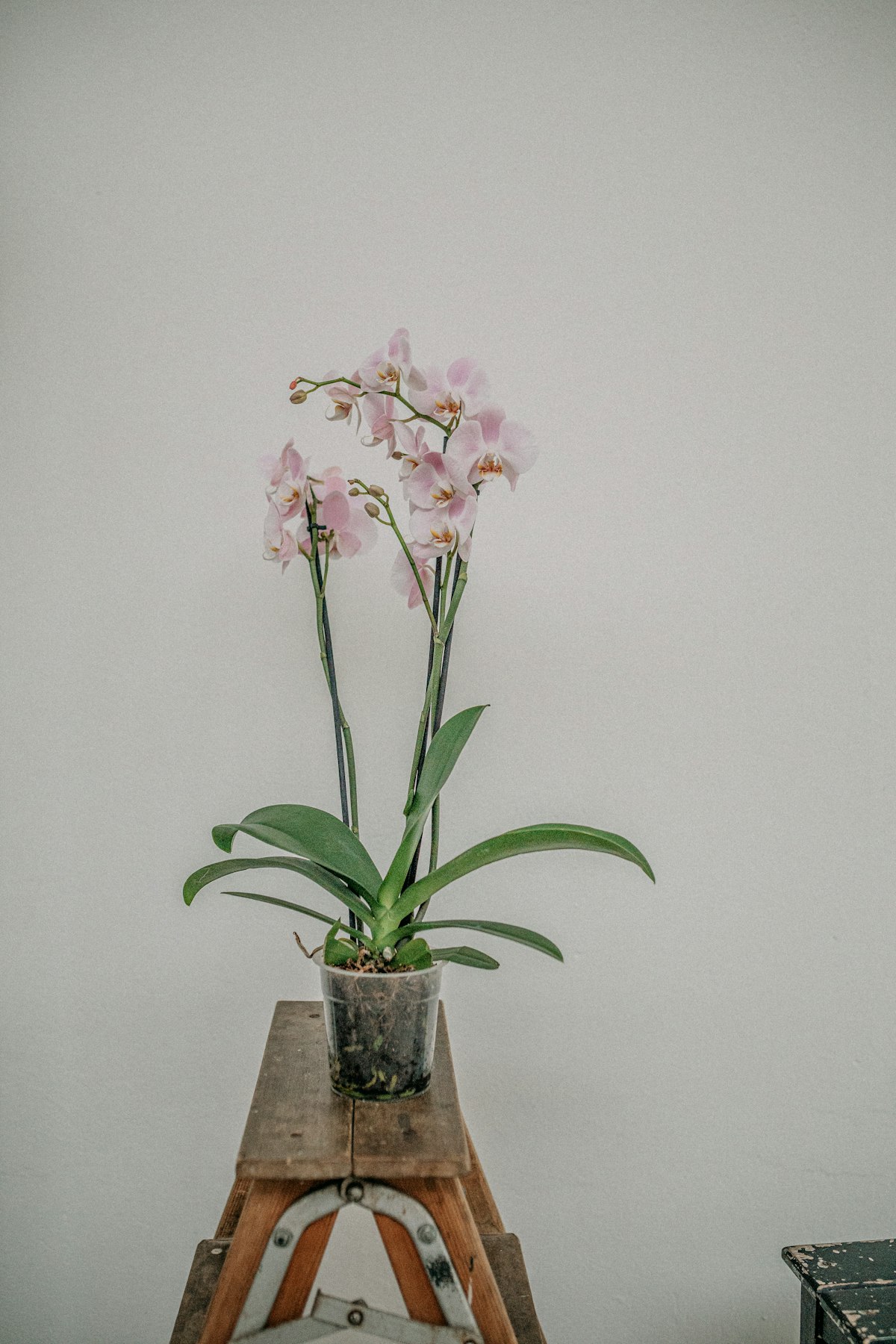
    Pink and white moth orchid in a clear pot on a wooden surface
    Photo by Corina Rainer on Unsplash

    Orchids have a bit of a reputation, don’t they? Exotic. Mysterious. One wrong look and they drop every flower. But here’s the truth: orchids are remarkably resilient, and repotting one is nowhere near as dramatic as it sounds.

    You just need to know what you’re doing — which is exactly what this guide is for.

    When Should You Repot an Orchid?

    Most orchids — and we’re talking about the common Phalaenopsis (moth orchid) that lives on every windowsill in Britain — need repotting every 18 to 24 months. A few signs that’ll tell you it’s time before the calendar does:

    • Roots are escaping out the bottom of the pot or climbing up over the rim
    • The bark or compost has broken down into a soggy, dark mush
    • Your orchid keeps tipping over because the top growth is heavier than the pot
    • It hasn’t flowered in ages despite good light and watering
    • You can see the roots circling the inside of the pot with nowhere left to go

    One thing to note: don’t repot while it’s actively flowering. Wait until the blooms have dropped — your orchid will thank you for the patience.

    What You’ll Need

    • A new pot — one size up from the current one (orchids like to be slightly snug)
    • Fresh orchid bark or specialist orchid compost — not standard potting compost
    • Clean scissors or a sharp knife
    • A bowl of lukewarm water

    A note on pots: orchids genuinely prefer transparent pots because their roots photosynthesise. Clear plastic is ideal. If you’re going into a decorative outer pot, just make sure there’s drainage.

    How to Repot an Orchid: Step by Step

    1. Water your orchid the day before. Hydrated roots are less brittle and much easier to work with.
    2. Gently tip the orchid out of its old pot. If it’s stuck, squeeze the sides or run a knife around the inner edge.
    3. Shake off the old bark. Most of it will fall away — don’t force it.
    4. Inspect the roots. Healthy roots are firm and silvery-white or green. Dead roots are brown, hollow, and mushy. Cut those off with clean scissors. Don’t be precious about it.
    5. Let the trimmed roots air dry for 20–30 minutes before repotting. This helps prevent rot.
    6. Add a layer of fresh orchid bark to the bottom of the new pot.
    7. Position your orchid and fill in around the roots with bark, pressing it in gently so the plant sits stable.
    8. Give it a good drink, then leave it somewhere bright but out of direct sun.

    That’s it. You’ve done it. You repotted an orchid and the world didn’t end.

    What About Those Aerial Roots?

    The roots dangling outside the pot aren’t a cry for help — they’re completely normal. Aerial roots absorb moisture from the air. Don’t shove them into the pot (you’ll break them) and definitely don’t cut them off unless they’re visibly dead.

    If they bother you aesthetically, tuck them loosely against the outside of the pot. They’ll cope.

    After Repotting: What to Expect

    Your orchid may go quiet for a few weeks after repotting — some drooping, no new growth. This is completely normal; it’s settling in, not sulking. Keep it watered (but not waterlogged), keep it in bright indirect light, and wait.

    New leaf growth usually appears within 4–8 weeks. A flower spike typically follows 3–6 months after that. Worth the wait.

    More Repotting Guides

    The Shortcut: Pre-Filled Cutie Pots

    If you’re repotting and fancy a fresh setup that looks as good as your orchid does, our pre-filled Cutie Pots come ready to go — the right growing medium already sorted. No measuring bark, no wondering if you’ve got the mix right. Just pot, plant, done.